
The surgical technologist program opens the door to a critical role in the operating room, a world of precision, teamwork, and life-saving procedures. These programs provide the essential training for individuals who aspire to be the unsung heroes of surgery, assisting surgeons and ensuring the sterile environment necessary for successful operations.
From mastering surgical instrumentation to understanding patient care protocols, surgical technologist programs offer a rigorous curriculum designed to equip students with the skills and knowledge to thrive in a demanding healthcare field. This exploration delves into the program’s structure, career prospects, and the essential steps needed to embark on this rewarding career path.
What are the essential academic prerequisites required for admission into a surgical technologist program?
Admission to a surgical technologist program demands a solid foundation in both academic and practical areas. Prospective students must meet specific prerequisites to ensure they possess the necessary knowledge and skills to succeed in the demanding field of surgical technology. These requirements typically encompass high school coursework, standardized testing, and specific prerequisite courses, alongside practical experience through observation or shadowing.
High School Coursework and Minimum GPA Requirements
Meeting minimum academic standards in high school is a crucial first step for aspiring surgical technologists. Programs generally assess a candidate’s readiness through a combination of coursework and grade point average.
Typically, successful applicants demonstrate a strong performance in science and mathematics. This includes courses like:
- Biology: Providing a fundamental understanding of human anatomy and physiology.
- Chemistry: Offering insights into the chemical processes within the human body.
- Mathematics: Developing critical thinking and problem-solving skills necessary for the program.
- English/Language Arts: Improving communication skills, which are vital for interacting with surgical teams.
While specific GPA requirements vary between programs, a minimum GPA of 2.5 to 3.0 is commonly required. Some highly competitive programs may necessitate a higher GPA. Applicants should research the specific requirements of the programs they are interested in and aim to exceed the minimum standards whenever possible to improve their chances of acceptance.
Standardized Tests and Scoring Benchmarks
Many surgical technologist programs utilize standardized tests to assess an applicant’s academic preparedness. These tests evaluate skills in reading comprehension, mathematics, science, and English.
The Test of Essential Academic Skills (TEAS) is a widely used entrance exam. The TEAS assesses a student’s readiness for health science programs. Scoring benchmarks vary by program, but a competitive score is often considered to be above 70%. Successful applicants usually have a well-rounded score across all sections of the TEAS, demonstrating a comprehensive understanding of the subjects tested.
The program may also consider the SAT or ACT scores, depending on the program’s policy. The score varies by program, and it’s essential to check the specific requirements.
Prerequisite Courses: Anatomy, Physiology, and Medical Terminology
A strong foundation in the human body is essential for a surgical technologist. Many programs require prerequisite courses in anatomy, physiology, and medical terminology. These courses provide a detailed understanding of the body’s structure, function, and medical vocabulary. The content can be structured in a 4-column responsive HTML table:
| Course | Description | Importance | Example Topics |
|---|---|---|---|
| Anatomy | The study of the structure of the human body. | Provides a foundational understanding of the body’s components. | Skeletal system, muscular system, nervous system, circulatory system. |
| Physiology | The study of the function of the human body. | Explains how the body’s systems work together. | Cellular function, respiratory system, digestive system, endocrine system. |
| Medical Terminology | The study of medical terms and their meanings. | Enables effective communication within the surgical team. | Prefixes, suffixes, root words, common medical abbreviations. |
These courses equip students with the necessary knowledge to understand surgical procedures and assist surgeons effectively. For example, knowing the specific anatomical structures involved in a knee replacement or understanding the medical terminology related to cardiac surgery are crucial for a surgical technologist’s role.
Observation Hours or Shadowing Experiences
Practical experience is a valuable asset for applicants. Many surgical technologist programs require applicants to complete observation hours or shadowing experiences in a surgical setting. This allows prospective students to witness firsthand the roles and responsibilities of surgical technologists.
Observation hours typically involve:
- Observing surgical procedures: Witnessing various surgical specialities.
- Interacting with surgical teams: Learning about teamwork and communication.
- Understanding the sterile environment: Gaining an appreciation for aseptic techniques.
The number of required observation hours varies, but commonly ranges from 8 to 20 hours. Applicants should actively seek opportunities to shadow surgical technologists in various surgical specialties to gain a comprehensive understanding of the profession. Documenting the experience with a log detailing the procedures observed and any interactions with the surgical team is essential for application purposes.
How does the curriculum of a surgical technologist program prepare students for their professional responsibilities?
The curriculum of a surgical technologist program is meticulously designed to equip students with the knowledge, skills, and ethical understanding necessary to function effectively as integral members of the surgical team. This preparation encompasses a broad range of subjects, teaching methodologies, and practical experiences, all aimed at fostering competence and confidence in the operating room environment.
Core Subjects in a Surgical Technologist Program
A strong foundation in core subjects is critical for surgical technologists. These subjects provide the theoretical and practical knowledge required for success.
- Surgical Instrumentation: This subject focuses on the identification, function, and proper handling of a vast array of surgical instruments. Students learn about the different types of instruments (e.g., retractors, forceps, scissors), their specific uses in various surgical procedures, and the techniques for their care and sterilization. For example, students learn the difference between a Mayo scissors and a Metzenbaum scissors, understanding that Mayo scissors are typically used for cutting heavier tissues while Metzenbaum scissors are used for finer dissection.
- Aseptic Technique: Aseptic technique is the cornerstone of preventing surgical site infections. Students receive intensive training in sterile field management, including proper handwashing, gowning and gloving procedures, and the principles of maintaining a sterile environment. They learn how to identify and correct breaks in sterile technique, understanding the critical importance of these practices for patient safety.
- Patient Care: Understanding the needs of the patient is crucial. This subject covers patient positioning, vital signs monitoring, and pre- and post-operative care. Students learn about the physiological effects of surgery and anesthesia, and how to anticipate and respond to potential complications. They are also trained in communication skills, emphasizing empathy and patient advocacy.
- Surgical Anatomy and Physiology: A thorough understanding of human anatomy and physiology is essential for surgical technologists. This subject covers the structure and function of the human body, with a specific focus on the systems most relevant to surgical procedures. This includes detailed study of the musculoskeletal, cardiovascular, respiratory, and nervous systems.
- Surgical Pharmacology: Students learn about the medications used during surgery, including anesthetics, antibiotics, and other drugs. They learn the effects of these drugs, their dosages, and the potential side effects. This knowledge allows them to anticipate the needs of the surgical team and ensure the safe administration of medications.
- Surgical Procedures: This subject provides an overview of common surgical procedures, including their indications, techniques, and potential complications. Students learn the roles of the surgical team members during each procedure and the instruments and supplies needed.
Teaching Methodologies in Surgical Technologist Programs
Effective learning in surgical technology relies on a variety of teaching methods. These methods aim to create a well-rounded and prepared professional.
- Lectures: Lectures provide the foundational knowledge necessary for understanding surgical principles and procedures. Instructors deliver information on topics such as anatomy, physiology, surgical instrumentation, and aseptic technique.
- Simulations: Simulation labs are critical for hands-on practice. Students use mannequins and simulated surgical environments to practice surgical techniques, instrument handling, and sterile field management. For instance, students might practice draping a patient, setting up a sterile field, or passing instruments during a simulated surgical procedure.
- Hands-on Laboratory Experiences: These labs offer students the opportunity to practice surgical techniques using real instruments and equipment. They might practice suturing, knot tying, and instrument handling under the supervision of instructors. This provides a safe environment for students to develop their skills and gain confidence.
- Interactive Workshops: Workshops encourage active learning through group activities and discussions. Students might participate in case studies, problem-solving exercises, and role-playing scenarios.
- Multimedia Presentations: The use of videos, animations, and other multimedia resources enhances learning by providing visual representations of surgical procedures and techniques.
Clinical Rotations in Surgical Technology Programs
Clinical rotations are a vital component of surgical technologist training, offering students real-world experience.
- Structure of Clinical Rotations: Clinical rotations typically involve supervised practice in various surgical settings. Students are assigned to different surgical specialties to gain experience with a variety of procedures. The duration of rotations varies, but they often last several weeks or months.
- Expectations of Students: During clinical rotations, students are expected to adhere to hospital policies and procedures, maintain a professional demeanor, and demonstrate a commitment to patient safety. They are evaluated on their technical skills, knowledge of surgical procedures, and ability to work effectively as part of a team.
- Types of Surgical Specialties: Students may encounter a wide range of surgical specialties during their clinical rotations, including:
- General Surgery: This encompasses a broad range of procedures, including abdominal surgery, hernia repair, and appendectomies.
- Orthopedic Surgery: This focuses on the treatment of musculoskeletal conditions, including joint replacements, fracture repair, and arthroscopic procedures.
- Cardiovascular Surgery: This involves procedures on the heart and blood vessels, such as coronary artery bypass grafting and valve replacements.
- Neuro Surgery: This specializes in procedures related to the brain, spinal cord, and peripheral nerves.
- Gynecological Surgery: This includes procedures related to the female reproductive system, such as hysterectomies and cesarean sections.
- Urological Surgery: This focuses on procedures related to the urinary tract and male reproductive system.
Professional Ethics and Legal Aspects in the Surgical Environment
The surgical environment demands the highest ethical and legal standards. Students must understand these aspects to maintain patient safety and professional integrity.
Confidentiality: Students must adhere to strict patient confidentiality, protecting patient information and privacy. This includes HIPAA regulations and the ethical obligation to not disclose patient information to unauthorized individuals.
Informed Consent: Students learn about the importance of informed consent, ensuring that patients understand the risks and benefits of surgical procedures before consenting to treatment.
Legal and Ethical Responsibilities: Students learn about the legal and ethical responsibilities of surgical technologists, including their scope of practice, liability, and the importance of adhering to professional standards of conduct.
Sterile Technique and Patient Safety: Students are taught to prioritize patient safety by meticulously following sterile technique protocols and reporting any potential breaches in sterile field management. This knowledge and adherence are critical to preventing surgical site infections.
Key Differences in Surgical Technologist Program Formats
Surgical technologist programs offer various pathways for aspiring professionals, each with distinct characteristics regarding duration, cost, and career prospects. Understanding these differences is crucial for prospective students to make informed decisions aligned with their educational goals and career aspirations. The three primary program formats are certificates, diplomas, and associate’s degrees.
Program Duration, Cost, and Curriculum Comparison
The program formats differ significantly in their duration, cost, and the breadth of the curriculum. These factors directly impact the student’s investment and the depth of knowledge and skills acquired.
* Certificate Programs: These programs typically offer the shortest duration, often completed within 9 to 12 months. The cost is generally lower compared to diploma or associate’s degree programs, as they focus on core surgical technology skills. The curriculum is highly focused, concentrating on the fundamental aspects of sterile technique, surgical instrumentation, and assisting during surgical procedures. For example, a certificate program might emphasize specific procedures common in a local hospital setting.
* Diploma Programs: Diploma programs usually span 12 to 18 months. The cost is moderately higher than certificate programs. The curriculum provides a more comprehensive overview of surgical technology, including a broader range of surgical specialties and possibly introductory courses in anatomy and physiology. A diploma program might offer additional training in areas such as surgical pharmacology or advanced instrumentation.
* Associate’s Degree Programs: Associate’s degree programs typically require 2 years of full-time study. The cost is the highest among the three formats, reflecting the more extensive curriculum. The curriculum encompasses a wider range of subjects, including general education courses (e.g., English, math, psychology) in addition to surgical technology-specific courses. This broader educational foundation can provide students with a more comprehensive understanding of the healthcare environment. For instance, an associate’s degree program might incorporate courses on medical ethics or healthcare management.
Career Advancement and Earning Potential Advantages and Disadvantages
The choice of program format can influence career advancement opportunities and earning potential. While all program graduates can become surgical technologists, the format of the program may affect long-term career prospects.
* Certificate Programs: Graduates can enter the workforce relatively quickly. However, career advancement may be limited without further education. Earning potential might be lower initially, but experience can lead to salary increases.
* Diploma Programs: Diplomas provide a good balance between time commitment and career prospects. Graduates may have slightly better career opportunities than certificate holders, especially in specialized surgical settings. Earning potential tends to be higher than certificate holders, though still lower than associate’s degree holders.
* Associate’s Degree Programs: Associate’s degrees often lead to the best career advancement opportunities, including supervisory roles and specialized surgical settings. Graduates may have higher starting salaries and greater long-term earning potential. An associate’s degree may also serve as a stepping stone to a bachelor’s degree, opening further career paths.
Accreditation Bodies and Program Quality
Accreditation is a critical factor in evaluating the quality and recognition of a surgical technologist program. Accreditation ensures that the program meets specific standards of educational quality and prepares graduates for professional practice.
* The Commission on Accreditation of Allied Health Education Programs (CAAHEP) is a prominent accreditation body for surgical technology programs. CAAHEP-accredited programs adhere to rigorous standards, including curriculum, faculty qualifications, and clinical experience requirements.
* The Accrediting Bureau of Health Education Schools (ABHES) is another recognized accreditation agency for surgical technology programs. ABHES accreditation signifies that the program meets specific standards related to educational quality and student outcomes.
* Accreditation by CAAHEP or ABHES is often required for eligibility to sit for the Certified Surgical Technologist (CST) exam, which is administered by the National Board of Surgical Technology and Surgical Assisting (NBSTSA). Passing the CST exam is a widely recognized credential in the surgical technology field.
* Bullet points Program accreditation by recognized bodies, such as CAAHEP or ABHES, ensures quality and recognition.
* Accreditation validates that a program meets established educational standards.
* Accreditation often influences eligibility for professional certifications.
* Accreditation may affect eligibility for financial aid.
* Accreditation may enhance career prospects and earning potential.
Comparison Chart: Surgical Technologist Program Formats
This table summarizes the key differences between certificate, diploma, and associate’s degree programs in surgical technology.
| Feature | Certificate Program | Diploma Program | Associate’s Degree Program |
|---|---|---|---|
| Duration | 9-12 months | 12-18 months | 2 years |
| Cost | Lower | Moderate | Higher |
| Curriculum Breadth | Focused on core skills | More comprehensive, wider range of specialties | Includes general education and broader healthcare topics |
| Career Advancement | Limited, experience dependent | Moderate, better than certificate | Strongest, including supervisory roles |
| Earning Potential | Lower initially | Higher than certificate | Highest |
| Accreditation | Often Accredited by ABHES or CAAHEP | Often Accredited by ABHES or CAAHEP | Often Accredited by ABHES or CAAHEP |
What practical skills and abilities do students develop throughout their surgical technologist program training?
Surgical technologist programs are meticulously designed to equip students with a comprehensive skillset. This includes not only theoretical knowledge but also the practical application of techniques essential for assisting surgeons in the operating room. Students undergo rigorous training, encompassing a wide array of procedures and skills, ensuring they are well-prepared to function effectively as integral members of the surgical team. This hands-on approach is critical for developing the competence and confidence required to excel in this demanding profession.
Surgical Procedures and Technical Proficiency
The cornerstone of a surgical technologist’s training is the development of proficiency in assisting with a variety of surgical procedures. This involves understanding the specifics of each procedure, mastering the use of surgical instruments, and adhering to strict protocols for patient safety. Students learn to anticipate the surgeon’s needs and respond quickly and efficiently.
Students gain experience in assisting with diverse surgical specializations. These include, but are not limited to:
- General Surgery: Assisting with procedures like appendectomies, cholecystectomies, and hernia repairs, involving the use of general surgical instruments, retractors, and suturing techniques.
- Orthopedic Surgery: Participating in joint replacements, fracture repairs, and arthroscopic procedures, including the handling of specialized orthopedic instruments, implants, and power tools.
- Cardiovascular Surgery: Assisting with procedures such as coronary artery bypass grafts (CABG) and valve replacements, involving the use of specialized instruments and understanding of cardiopulmonary bypass systems.
- Gynecological Surgery: Assisting with procedures like hysterectomies and cesarean sections, involving instruments and techniques specific to the female reproductive system.
- Urological Surgery: Assisting with procedures like prostatectomies and kidney stone removal, involving specialized instruments and techniques.
- Neuro Surgery: Assisting with procedures like craniotomies, spinal fusions and shunt placements, involving specialized instruments and techniques.
Students are trained in the following critical aspects of surgical assistance:
- Instrumentation: The ability to identify, handle, and pass surgical instruments accurately and efficiently. This includes understanding the function of each instrument and anticipating the surgeon’s needs. Proficiency is developed through hands-on practice, simulations, and observation of experienced professionals.
- Draping: Preparing the sterile field by correctly draping the patient and the surgical site. This is a crucial step in maintaining a sterile environment and preventing surgical site infections. Students learn to select the appropriate drapes and apply them in a manner that ensures optimal patient exposure while maintaining sterility.
- Patient Positioning: Positioning the patient safely and effectively for the specific surgical procedure. This requires knowledge of anatomical considerations, pressure point prevention, and the use of specialized positioning devices. Proper positioning is crucial for surgical access and patient comfort and safety.
Teamwork and Communication in the Surgical Environment
Effective teamwork and clear communication are essential for the smooth and safe execution of surgical procedures. Surgical technologists are integral members of the surgical team, working alongside surgeons, anesthesiologists, nurses, and other healthcare professionals. Training programs emphasize the development of these crucial soft skills through a variety of methods.
The methods for fostering these skills include:
- Simulations: Utilizing simulated surgical scenarios to practice teamwork and communication in a controlled environment. These simulations allow students to experience the dynamics of the operating room and practice their roles in a safe and supportive setting.
- Role-Playing: Engaging in role-playing exercises to practice communication techniques and conflict resolution. This helps students develop their ability to communicate effectively with all members of the surgical team, including surgeons, nurses, and anesthesia providers.
- Case Studies: Analyzing real-life surgical cases to identify areas where teamwork and communication could be improved. This allows students to learn from the experiences of others and develop strategies for enhancing their own performance.
- Interprofessional Education: Participating in joint training sessions with students from other healthcare disciplines, such as nursing and medicine. This fosters a deeper understanding of the roles and responsibilities of each team member and promotes collaborative practice.
Surgical technologists must be able to:
- Anticipate the needs of the surgical team: Understanding the steps of the procedure and anticipating the instruments, supplies, and equipment needed.
- Communicate clearly and concisely: Using standardized terminology and communicating effectively with all team members.
- Work collaboratively: Supporting each other and contributing to a positive and efficient work environment.
- Adapt to changing situations: Being flexible and able to adjust to unexpected events or changes in the surgical plan.
Maintaining a Sterile Field and Preventing Surgical Site Infections
Maintaining a sterile field is the single most important aspect of preventing surgical site infections (SSIs). Surgical technologists play a crucial role in adhering to strict protocols to ensure a sterile environment throughout the surgical procedure. The consequences of failing to maintain a sterile field can be severe, leading to patient complications, prolonged hospital stays, and increased healthcare costs.
The protocols used to prevent surgical site infections include:
- Sterilization Techniques: Thoroughly sterilizing all surgical instruments and equipment using approved methods such as autoclaving, chemical sterilization, or gas sterilization. Students learn the principles of sterilization and how to properly operate and maintain sterilization equipment.
- Hand Hygiene: Performing proper handwashing and surgical scrubbing techniques before entering the sterile field. This is a critical step in reducing the risk of contamination. Students are trained in the proper techniques for surgical scrubbing, including the use of antimicrobial soaps and the maintenance of sterile gloves.
- Sterile Gowning and Gloving: Donning sterile gowns and gloves correctly to create a barrier between the surgical team and the patient. Students are trained in the proper techniques for gowning and gloving, ensuring that all surfaces that come into contact with the patient are sterile.
- Maintaining the Sterile Field: Adhering to strict principles of sterile technique throughout the procedure, including avoiding contamination of sterile items, monitoring the sterile field for breaches, and correcting any violations immediately. Students learn the principles of sterile technique and how to apply them in the operating room.
- Proper Draping: Using sterile drapes to create a barrier around the surgical site and to isolate the patient from the non-sterile environment.
- Environmental Control: Maintaining a clean and controlled operating room environment, including proper ventilation, temperature, and humidity.
- Waste Disposal: Properly disposing of contaminated materials and sharps to prevent the spread of infection.
These practices are not merely procedural; they are fundamental to patient safety. Students are taught to recognize and address potential breaches of sterile technique immediately. They learn the importance of meticulous attention to detail and the consequences of even minor lapses in sterile technique. This rigorous training is essential for ensuring that surgical technologists are prepared to contribute to the delivery of safe and effective surgical care.
Scenario: A patient is undergoing an open appendectomy. The surgical technologist assists the surgeon throughout the procedure. The technologist anticipates the need for instruments, such as the scalpel for the initial incision, retractors to expose the surgical field, and clamps to control bleeding. They also prepare the suction device to clear blood and fluids. The technologist accurately passes the instruments to the surgeon, ensuring they are positioned correctly and in a timely manner. They monitor the sterile field, immediately addressing any breaches, such as a dropped instrument. As the surgery progresses, the technologist assists with draping, patient positioning, and wound closure, ensuring all instruments and supplies are accounted for and the sterile field is maintained.
How do surgical technologist programs support students in preparing for the Certified Surgical Technologist (CST) exam?
Surgical technologist programs are designed to not only provide students with the foundational knowledge and practical skills needed for the profession but also to equip them for success on the Certified Surgical Technologist (CST) exam. This certification is a critical step in a surgical technologist’s career, and programs dedicate significant resources to ensuring students are well-prepared.
Importance of the CST Certification and Its Impact
The Certified Surgical Technologist (CST) certification, administered by the National Board of Surgical Technology and Surgical Assisting (NBSTSA), is a widely recognized credential within the surgical technology field. It signifies that a surgical technologist has met specific standards of knowledge and competency. Holding the CST certification offers several advantages:
- Enhanced Career Opportunities: Many employers, including hospitals and surgical centers, prioritize or require CST certification for employment. This certification can significantly broaden job prospects.
- Increased Earning Potential: Certified surgical technologists often command higher salaries than their non-certified counterparts. This difference reflects the value employers place on the certification.
- Professional Recognition and Credibility: The CST certification demonstrates a commitment to professional excellence and adherence to industry standards. It enhances the credibility of the surgical technologist among colleagues, surgeons, and patients.
- Improved Patient Safety: CST-certified technologists are trained to understand and apply best practices in sterile technique, patient safety, and surgical procedures, which contributes to better patient outcomes.
- Career Advancement: The CST certification can serve as a stepping stone for career advancement, opening doors to leadership roles, specialized surgical areas, and continuing education opportunities.
Resources and Study Aids Offered by Surgical Technologist Programs
Surgical technologist programs typically provide a variety of resources and study aids to help students prepare for the CST exam. These resources are integrated into the curriculum to reinforce learning and provide focused exam preparation.
- Comprehensive Coursework: The core curriculum of surgical technologist programs covers all the essential topics tested on the CST exam, including surgical instrumentation, surgical procedures, patient safety, and sterile technique.
- Practice Exams and Quizzes: Programs often administer practice exams and quizzes throughout the program to assess student understanding and familiarize them with the exam format. These assessments help identify areas where students need further review.
- Review Sessions: Many programs offer dedicated review sessions led by experienced instructors or certified surgical technologists. These sessions provide opportunities to clarify concepts, answer questions, and practice test-taking strategies.
- Study Guides and Textbooks: Students are provided with textbooks and study guides specifically designed to cover the CST exam content. These resources offer detailed explanations, practice questions, and exam-taking tips.
- Online Resources: Programs may provide access to online resources such as practice quizzes, interactive simulations, and video tutorials. These online tools offer flexibility and convenience for students to study at their own pace.
- Mentorship and Support: Instructors and program staff often offer mentorship and support to students, providing guidance on study strategies, exam preparation, and career planning.
Overview of the CST Exam Format
The CST exam is a comprehensive assessment designed to evaluate a candidate’s knowledge and skills in the field of surgical technology. Understanding the exam format is crucial for effective preparation.
- Exam Administration: The CST exam is administered by the NBSTSA. Candidates must meet eligibility requirements, including completion of an accredited surgical technology program.
- Exam Content Areas: The CST exam covers a broad range of topics, including:
- Preoperative Preparation: Patient positioning, prepping, draping, and sterile technique.
- Intraoperative Procedures: Surgical instrumentation, surgical procedures, and surgical pharmacology.
- Postoperative Procedures: Wound care, surgical counts, and postoperative patient care.
- Surgical Technology Fundamentals: Anatomy and physiology, medical terminology, and patient safety.
- Question Types: The exam primarily consists of multiple-choice questions. These questions assess a candidate’s ability to recall information, apply knowledge, and make critical judgments.
- Exam Length and Time: The CST exam typically consists of a set number of questions and a specified time limit for completion. Candidates must manage their time effectively to answer all questions.
- Scoring Methods: The CST exam is scored using a standardized method. Candidates receive a score based on the number of correct answers. A passing score is required to obtain certification.
- Exam Application and Fees: Candidates must submit an application and pay a fee to take the CST exam. Information on application procedures and fees is available on the NBSTSA website.
Practice Quiz Covering Key Concepts
The following table presents a practice quiz designed to test knowledge of key concepts covered in the CST exam. This quiz is formatted as a four-column responsive HTML table.
| Question | Option A | Option B | Option C | Option D |
|---|---|---|---|---|
| What is the primary purpose of surgical draping? | To maintain the patient’s body temperature. | To create a sterile field around the surgical site. | To provide comfort for the patient. | To assist the surgical team with positioning. |
| Which of the following is a critical component of sterile technique? | Wearing street shoes in the operating room. | Using a sterile gown and gloves. | Talking loudly during the procedure. | Handling sterile instruments with bare hands. |
| What is the role of the surgical technologist during the “time-out” procedure? | To verify the patient’s identity, surgical site, and procedure. | To assist the surgeon with the incision. | To monitor the patient’s vital signs. | To prepare the instruments. |
| Which instrument is commonly used for tissue dissection? | A retractor | A scalpel | A hemostat | A suction tip |
| What is the purpose of surgical counts? | To track the patient’s blood loss. | To ensure all sponges, sharps, and instruments are accounted for. | To document the surgical procedure. | To assist the surgeon. |
What career prospects and opportunities exist for graduates of a surgical technologist program?
The surgical technology field offers graduates a diverse range of employment opportunities across various healthcare settings. Demand for surgical technologists remains consistently strong, driven by an aging population and advancements in surgical procedures. This section explores the career paths available, typical job duties, salary expectations, and potential for advancement, providing a comprehensive overview of the profession’s landscape.
Healthcare Settings for Surgical Technologists
Surgical technologists find employment in a variety of healthcare environments. Each setting offers a unique set of challenges and rewards, contributing to the diversity of the profession.
* Hospitals: Hospitals represent the most common employers. They offer a wide range of surgical specializations, from general surgery to highly specialized procedures.
* Ambulatory Surgical Centers (ASCs): ASCs provide outpatient surgical services, focusing on same-day procedures. These centers often have a more streamlined environment and a faster pace.
* Private Practices: Some surgeons and surgical groups employ surgical technologists directly within their private practices, offering a more focused work environment.
* Military: Surgical technologists can serve in the military, providing surgical support to service members and their families. This path offers unique benefits and opportunities for training and experience.
* Veterinary Clinics: Surgical technologists may find opportunities to work in veterinary clinics, assisting in surgical procedures for animals.
Job Duties and Responsibilities in Different Work Environments
The specific duties of a surgical technologist can vary depending on the work environment and the surgical specialty. However, core responsibilities remain consistent across settings.
* Preparation: Preparing the operating room (OR) by setting up surgical instruments, equipment, and supplies. This includes sterilizing instruments and ensuring all necessary items are readily available.
* Scrubbing: Scrubbing in and assisting the surgical team during procedures. This involves passing instruments, anticipating the surgeon’s needs, and maintaining a sterile field.
* Circulating: Acting as a circulating nurse’s assistant, responsible for tasks outside the sterile field, such as obtaining additional supplies, managing equipment, and documenting the procedure.
* Patient Care: Providing support to patients before, during, and after surgery, including positioning, draping, and assisting with patient transfer.
* Equipment Maintenance: Maintaining and troubleshooting surgical equipment, ensuring it functions properly.
Average Salaries and Career Advancement in Surgical Technology
The surgical technology field offers competitive salaries and opportunities for career growth. Factors influencing salary include experience, location, and the type of facility.
* Average Salary: The average annual salary for a surgical technologist in the United States typically falls within a range. However, this figure is a general estimate and can vary.
* Salary Factors: Several elements impact salary, including experience, certifications, and the geographic location of the job.
* Career Advancement: Surgical technologists can advance their careers through additional certifications, specialized training, and supervisory roles.
* Certified Surgical First Assistant (CSFA): Becoming a CSFA allows surgical technologists to assist surgeons more directly during procedures.
* Education: Further education, such as a bachelor’s degree in healthcare administration, can open doors to management positions.
* Specialization: Focusing on a specific surgical specialty, such as cardiovascular surgery or neurosurgery, can increase earning potential and job satisfaction.
* Leadership: Taking on roles such as lead surgical technologist or OR supervisor provides opportunities for leadership and management.
Image Description: Surgical Technologist at Work
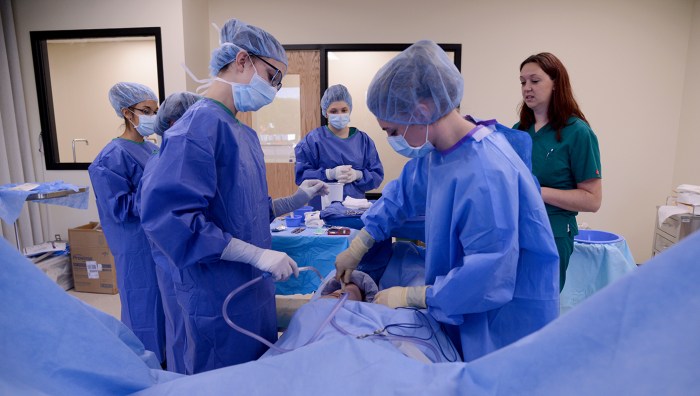
The image depicts a surgical technologist actively engaged in a surgical procedure within a modern operating room. The technologist, clad in surgical scrubs, a surgical cap, mask, and sterile gloves, stands at the surgical table. The OR is brightly lit, with overhead surgical lights illuminating the surgical field. Sterile drapes cover the patient, with only the surgical site exposed. The technologist is holding a surgical instrument, possibly a hemostat or a retractor, and is focused on the surgeon. Other members of the surgical team, including the surgeon, the circulating nurse, and potentially a surgical assistant, are visible in the background, all wearing appropriate sterile attire. Surgical equipment, such as monitors displaying vital signs and specialized instruments, is neatly arranged on instrument tables and stands. The overall environment conveys a sense of precision, professionalism, and teamwork.
What strategies can be used to locate and select the most suitable surgical technologist program for an individual’s career aspirations?
Choosing the right surgical technologist program is a pivotal decision, shaping not only your education but also your career trajectory. This involves careful research, self-assessment, and a proactive approach to ensure the program aligns with your individual goals and the demands of the healthcare field. A strategic selection process maximizes your chances of success and professional fulfillment.
Factors to consider when evaluating surgical technologist programs
Selecting a surgical technologist program requires a comprehensive evaluation of various aspects to ensure a good fit. Accreditation, program reputation, and location are crucial elements that directly influence the quality of education and future career prospects.
- Accreditation: Accreditation by organizations like the Commission on Accreditation of Allied Health Education Programs (CAAHEP) or the Accrediting Bureau of Health Education Schools (ABHES) signifies that a program meets established quality standards. This accreditation is often a prerequisite for eligibility to sit for the Certified Surgical Technologist (CST) exam and may influence employment opportunities.
Accreditation assures that the program meets the standards established by the accrediting body.
Verify the program’s accreditation status and the accrediting agency’s reputation.
- Program Reputation: Research the program’s reputation within the healthcare community. Consider the program’s history, the success of its graduates, and its relationships with local hospitals and surgical centers. Check online reviews, testimonials from former students, and any awards or recognitions the program has received. A strong reputation can indicate a well-established program with strong industry connections.
- Location: Consider the program’s location in relation to your residence, transportation options, and potential clinical site locations. A program closer to home might reduce commuting time and costs. Also, consider the geographic area where you intend to work after graduation. Programs with strong local hospital affiliations might offer better networking and job placement opportunities in that area.
Importance of researching program outcomes
Understanding program outcomes provides crucial insights into the program’s effectiveness and its ability to prepare students for successful careers. This research involves analyzing job placement rates and student satisfaction to gain a realistic view of the program’s impact.
- Job Placement Rates: Investigate the program’s job placement rate for graduates. High placement rates indicate that the program effectively prepares students for employment and has strong relationships with potential employers. Inquire about the timeframe for job placement after graduation (e.g., within six months). A placement rate of 80% or higher is generally considered favorable.
- Student Satisfaction: Assess student satisfaction through surveys, testimonials, and online reviews. Positive feedback from current and former students suggests a supportive learning environment, effective instruction, and overall satisfaction with the program. Look for comments about faculty support, clinical experience quality, and preparation for the CST exam.
Guidance on visiting and interviewing at prospective surgical technologist programs
Visiting and interviewing at prospective programs is a critical step in the selection process. This allows for a firsthand assessment of the program’s environment, faculty, and resources. Preparing thoughtful questions ensures you gather the information necessary to make an informed decision.
- Visiting the Program: Schedule a campus visit to observe the learning environment. This includes classrooms, labs, and any simulation facilities. Speak with current students and faculty to get their perspectives on the program. Observe a class if possible.
- Interviewing: Prepare a list of questions to ask during the interview.
- Questions to Ask:
- What is the program’s pass rate on the CST exam?
- What is the program’s job placement rate?
- What types of clinical experiences are offered?
- What support services are available to students?
- What are the program’s admission requirements?
- What to Look For:
- A well-maintained learning environment.
- Experienced and supportive faculty.
- Comprehensive curriculum.
- Opportunities for hands-on clinical experience.
Checklist for evaluating a surgical technologist program
Using a checklist can help organize the evaluation process and ensure all key aspects are considered. This provides a structured approach to comparing programs and identifying the best fit.
- Curriculum:
- Does the curriculum cover all essential surgical technology topics?
- Are the courses up-to-date with current surgical practices and technologies?
- Is the curriculum aligned with the CST exam content Artikel?
- Faculty:
- Are the instructors experienced and qualified?
- Are faculty members accessible and supportive?
- Do faculty members have strong connections with local hospitals and surgical centers?
- Clinical Experience:
- Are there sufficient clinical rotation hours?
- Are clinical sites diverse and offer a range of surgical specialties?
- Are students provided with adequate supervision and feedback during clinical rotations?
- Resources:
- Are there adequate learning resources, such as textbooks, online materials, and simulation labs?
- Are there student support services, such as tutoring and career counseling?
- Is the program accredited?
- Program Outcomes:
- What is the CST exam pass rate?
- What is the job placement rate?
- What is the student satisfaction rate?
Concluding Remarks
In conclusion, a surgical technologist program offers a vital pathway into a dynamic and essential healthcare profession. By providing comprehensive training in surgical procedures, ethical practices, and the CST exam preparation, these programs equip aspiring professionals with the tools to excel in the operating room. Choosing the right program, understanding the career opportunities, and embracing the challenges of this demanding role will lead to a fulfilling and impactful career, contributing significantly to patient care and surgical success.
